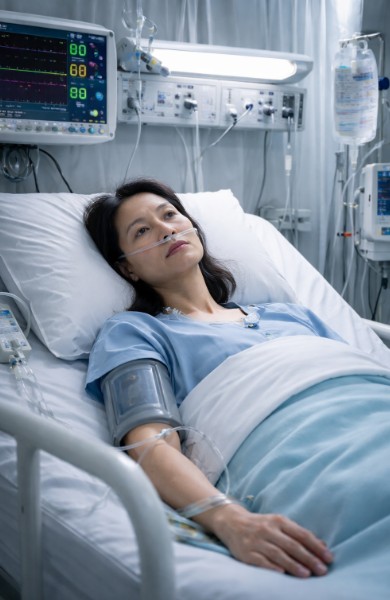
Early Sunday morning, I returned to the hospital.
My wife had spent the night in the Intensive Care Unit (ICU) following her pericardial window surgery. As I walked into the unit, I felt a mixture of anxiety and hope. The surgery was over, but I knew our journey was far from finished.
The nurses reassured me that her vital signs were stable.
Her blood pressure was normal.
Her heart rate was normal.
Her oxygen levels were acceptable.
There were no signs of immediate complications from the surgery.
For that, I was grateful.
Yet one problem remained.
Her appetite had still not returned.
The hospital staff continued to bring meals, but she could barely tolerate them. It was not because the food was poorly prepared. She simply had no desire to eat.
Most of the time, she survived on small amounts of milk or yogurt.
Watching someone recover from surgery while struggling to eat is difficult. Every caregiver knows that healing requires strength, and strength requires nutrition. Yet there are times when the body simply refuses.
As I sat beside her bed, my thoughts began to wander beyond the surgery itself.
The operation had addressed the fluid around her heart.
But many questions remained unanswered.
Had the cancer spread somewhere we could not yet see?
Had the cancer developed new genetic mutations?
Was the cancer becoming resistant to Tagrisso after more than two years of treatment?
And perhaps the most frightening question of all:
If any of these things were true, what would we do next?
The doctors had already sent samples from the pericardial fluid for advanced genetic testing. We hoped those results would provide answers. But waiting for answers is often one of the hardest parts of cancer treatment.
Every day feels suspended between hope and uncertainty.
Like many families in Singapore, we also faced another reality: the financial burden of cancer treatment.
Singapore provides excellent medical care, but advanced cancer treatment can be expensive. Even with insurance coverage, there are still significant out-of-pocket expenses.
Years ago, when we first purchased our insurance, we believed we were adequately protected.
At the time, my wife was healthy.
I was working.
My employer provided additional medical benefits for family members.
We thought an Integrated Shield Plan would be enough.
We never imagined that one day we would find ourselves facing stage 4 cancer, repeated hospital admissions, surgery, and advanced genetic testing.
Cancer changes more than a person’s health.
It changes every aspect of life.
Many people have asked why I eventually left my job.
The answer is simple.
Sometimes life forces you to choose between two things you wish you could keep.
If I continued working full-time, someone else would need to care for my wife.
But our situation made that impossible.
In the end, I chose to stay by her side.
The decision felt right, but it also meant giving up my income and the additional support that came with my employment.
For now, we are living on savings.
One month passes.
Then another.
But I know that eventually those savings will run out.
My wife understands this.
More than once, she has quietly told me that perhaps we should stop treatment.
Perhaps we should not continue.
Every time she says that, I give her the same answer.
Let’s keep going.
One step at a time.
As long as there is a treatment option available, as long as there is a reason to hope, I want us to keep moving forward together.
I do not know what the future holds.
I do not know what the genetic tests will reveal.
I do not know what challenges may still lie ahead.
But as I sat beside her ICU bed that Sunday morning, watching the monitors quietly display her heartbeat, I found myself making the same wish I make every day.
That she will recover.
That she will regain her strength.
And that somehow, despite everything, better days are still ahead of us.
In the next chapter, I will share our journey as we waited for the genetic testing results and tried to understand what they might mean for our future treatment options.
답글 남기기