After several days of waiting, surgery day finally arrived.
June 13 had been circled on our calendar ever since the doctors confirmed the plan for a pericardial window procedure. Although the medical team described it as a relatively straightforward operation, knowing that my wife would be taken into an operating room was still difficult to accept.
Because the surgeon performing the procedure was coming from outside Raffles Hospital, the operation had been scheduled for 6:00 PM. The team advised that fasting would only be required for six hours before surgery.
In theory, that sounded manageable.
In reality, my wife’s appetite had still not returned.
That morning she managed only a little milk and one or two pieces of Japanese sushi. Even that was difficult. She told me she simply had no desire to eat. Whether it was the illness itself, the stress of hospitalization, or anxiety about the upcoming surgery, I could not tell.
I informed the doctors that she had barely eaten.
Unfortunately, because the surgery was approaching, intravenous fluids could not be started either. There was little anyone could do except wait.
As the afternoon passed, the anticipation grew.
By 6:00 PM we expected the procedure to begin, but we were informed that the surgeon had been delayed by another patient. Another hour passed.
Finally, at around 7:00 PM, my wife was taken to the operating room.
Until that moment, I had remained surprisingly calm.
I kept reminding myself that this was a commonly performed procedure and that the medical team was experienced. But as I watched her disappear through the operating room doors, a sudden feeling of fear appeared.
For a brief moment, all the medical explanations and statistics faded away.
She was no longer a patient or a diagnosis.
She was simply my wife.
The surgery itself took several hours.
Including the time required for anesthesia and recovery, nearly four hours passed before we received an update.
Eventually, the call came.
The procedure had gone well.
There had been no major complications, and the surgical team was satisfied with the outcome.
The relief I felt at that moment is difficult to describe.
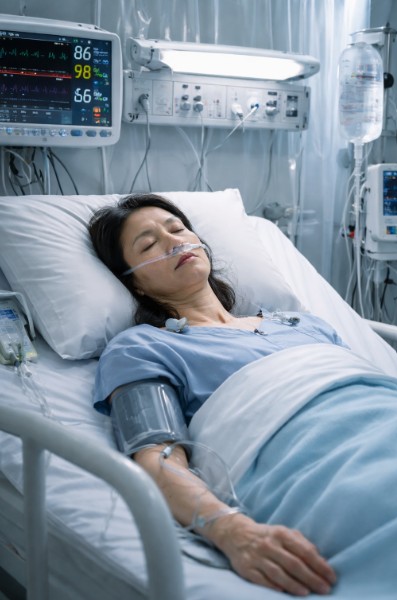
Shortly before midnight, around 11:30 PM, my wife was transferred to the Intensive Care Unit (ICU) for overnight monitoring.
I was given a brief opportunity to see her.
She was asleep.
Monitors surrounded her bed, displaying heart rate, blood pressure, oxygen levels, and other vital signs. Despite the intimidating environment of the ICU, the nurses reassured me that everything appeared stable.
Her pulse was stable.
Her blood pressure was stable.
There were no signs of immediate complications.
For the first time in several days, I felt able to breathe a little easier.
There was nothing more to do that night except wait for morning.
As I left the ICU, I knew that the next chapter of our journey would begin when she woke up and we learned how her body would respond to the surgery.
In the next chapter, I will share our first morning after the pericardial window procedure and the early signs of recovery that followed.
댓글 남기기