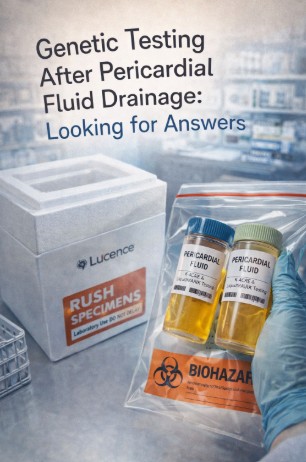
The day after the drainage procedure, we received an important update from the medical team.
The laboratory had confirmed the presence of cancer cells in the fluid removed from around my wife’s heart.
Although we knew this was a possibility, hearing the result was still difficult.
However, the discussion quickly shifted from what had happened to what could be learned from the fluid sample.
More Than a Routine Laboratory Test
The doctors explained that the fluid collected during the procedure would provide an opportunity for additional genetic testing.
Part of the sample would be processed into a cell block for comprehensive genomic profiling.
Another portion would be used for advanced molecular testing designed to identify genetic mutations and possible treatment resistance.
The goal was not only to confirm the presence of cancer cells but also to understand how the cancer might be changing.
Why Genetic Testing Matters
My wife had been receiving Tagrisso (osimertinib) since her diagnosis of stage 4 lung cancer with brain metastases in early 2024.
The treatment had been effective for a long period of time.
However, doctors explained that cancers can evolve over time.
New mutations can appear, and some of these mutations may reduce the effectiveness of existing treatments.
The genetic testing was intended to help determine whether any new changes had developed and whether future treatment adjustments might eventually be necessary.
Waiting for the Results
The cancer center informed us that the testing process could take several weeks.
Some of the tests involved hundreds of genes and advanced molecular analysis.
We were told that results might take approximately four weeks and possibly up to six weeks.
That waiting period felt long.
The drainage procedure had provided immediate answers about the fluid around the heart, but the genetic testing represented a search for answers about the cancer itself.
Living Between Questions and Answers
One of the most challenging parts of cancer treatment is the waiting.
Waiting for scans.
Waiting for laboratory reports.
Waiting for genetic testing results.
At this stage, there were still many unanswered questions.
Had the cancer developed new mutations?
Was Tagrisso still working as expected?
Would future treatment changes be required?
For now, all we could do was wait for the results and focus on recovery from the recent procedure.
In the next article, I will share how the doctors decided to proceed with a pericardial window procedure and why they believed it was necessary despite the successful drainage.
답글 남기기