Introduction
When a loved one is living with Stage 4 lung cancer, regular scans become part of life. Each appointment brings a mixture of hope and anxiety. While we were primarily focused on monitoring the cancer itself, an unexpected finding on a routine CT scan eventually led us down a completely different medical path.
This is the story of how we first discovered a small pericardial effusion and how that seemingly minor finding became an important part of our medical journey.
A Routine Follow-Up Scan
In early May 2026, my wife underwent a routine CT scan as part of her ongoing treatment for Stage 4 lung cancer.
At the time, she was continuing targeted therapy and appeared relatively stable. Like many cancer patients, she experienced occasional fatigue, but there were no obvious warning signs suggesting a serious heart-related problem.
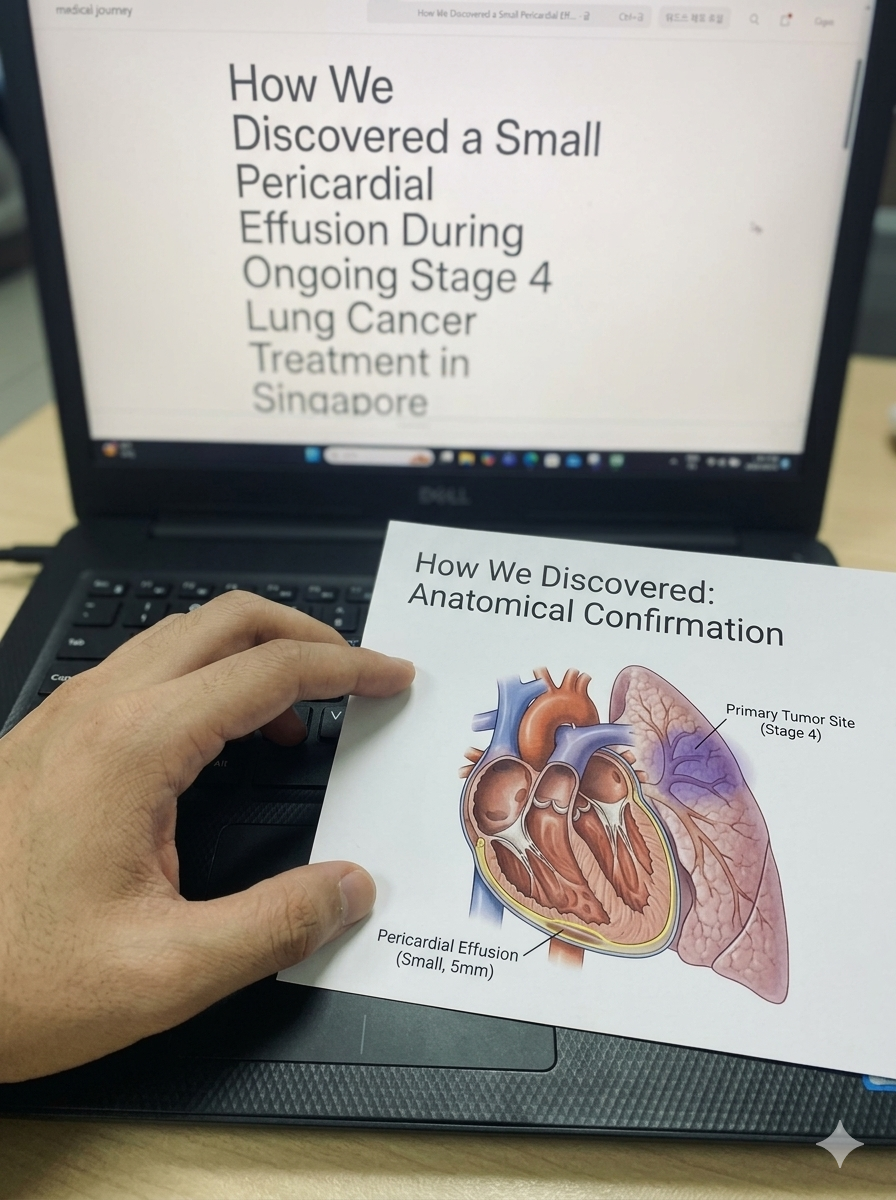
When the scan results came back, the doctors noted a small amount of fluid around the heart, known medically as a pericardial effusion.
The finding did not immediately appear alarming. Small pericardial effusions can sometimes be observed without requiring urgent intervention. The medical team decided to continue monitoring the situation closely.
At that point, neither of us realized how important this finding would become.
Symptoms Began to Appear
Over the following weeks, subtle changes started to occur.
My wife gradually developed swelling in her feet and lower legs. At first, we wondered whether it was related to fatigue, reduced activity, medication side effects, or simply the stress of ongoing cancer treatment.
Soon afterward, she began experiencing abdominal fullness and discomfort. Even small meals made her feel unusually full. Her appetite declined significantly.
What made the situation confusing was that these symptoms did not initially seem related to the heart.
There was no severe chest pain.
There was no dramatic collapse.
There was no obvious medical emergency.
Instead, the symptoms developed slowly and quietly.
Looking Back
In hindsight, those symptoms were likely early warning signs that fluid around the heart was increasing and beginning to affect normal circulation.
At the time, however, it was difficult to recognize the connection.
Like many caregivers, I focused primarily on the cancer itself. I did not fully appreciate how complications outside the lungs could become equally important.
The small pericardial effusion noted on the CT scan seemed like a minor detail compared with everything else we were dealing with.
Unfortunately, it would prove to be much more significant than we expected.
An Important Lesson
One of the biggest lessons we learned was that even a “small” finding on a scan deserves careful attention.
Cancer treatment involves far more than simply monitoring tumors.
Fluid accumulation, cardiovascular complications, treatment side effects, and changes in overall health can all become important parts of the journey.
What appeared to be a small amount of fluid around the heart eventually led to additional testing, hospitalization, drainage procedures, and ultimately surgery.
Conclusion
The discovery of a small pericardial effusion was the beginning of a new chapter in our family’s medical journey.
At the time, it seemed like a routine observation on a CT report.
Looking back now, it was the first sign of a complication that would require urgent medical attention in the weeks ahead.
In our next article, I will share how swelling in the feet and unexpected abdominal fullness became warning signs that something more serious was developing.
— The Caregiver
댓글 남기기